800.822.3501 customer service:
800.822.3501 customer service:

When surveyors from The Joint Commission (TJC) walk through your facility, they’re not checking blanket warming temperatures against a single mandated number. Instead, TJC holds organizations accountable to the best-practice guidance published by bodies like AORN (the Association of periOperative Registered Nurses) and ECRI (Emergency Care Research Institute). Those guidelines are specific — and for good reason.
Understanding what those standards actually require, and pairing them with the right equipment, is one of the most straightforward ways to protect patients and stay survey-ready.
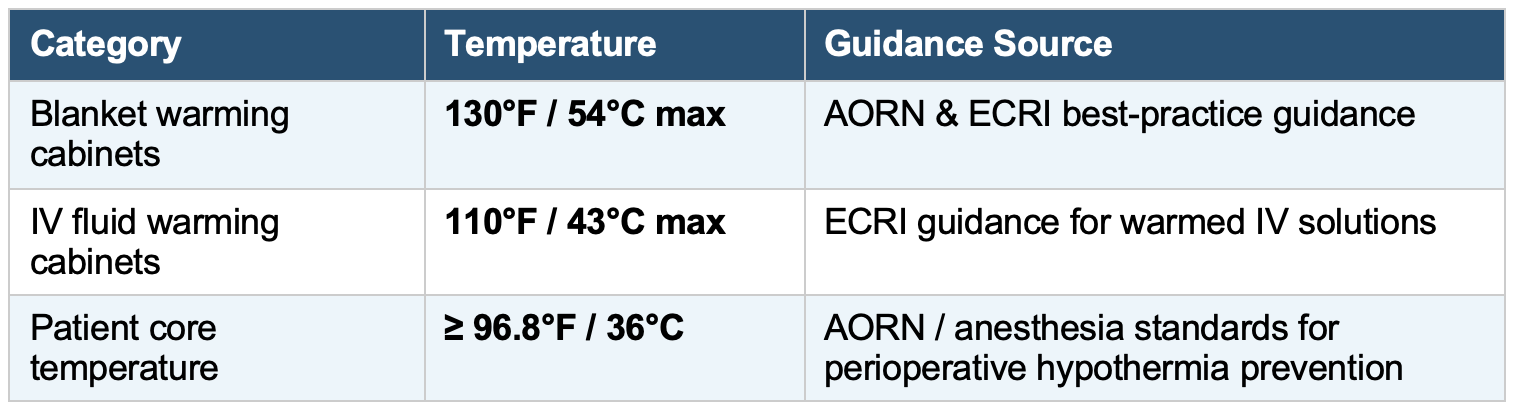
TJC: What standards apply to the requirement for organizations to maintain blanket temperatures?
AORN and ECRI guidance for blanket warming goes beyond temperature. Cabinets should be maintained per manufacturer instructions, never overloaded, and should only hold items they were designed to warm. Mixing blankets and IV fluids in the same cabinet (unless it’s explicitly engineered for both) is a compliance gap that’s easy to overlook.
Additionally, many organizations require documentation of cabinet temperature and maximum storage duration, which is often completed by nurses occupying their valuable time.
Non-compliance with established temperature guidelines can lead to adverse patient outcomes, reputational damage, and even financial penalties. Regulatory bodies and accreditation organizations assess healthcare facilities on their adherence to standards, and deviations can impact evaluations.
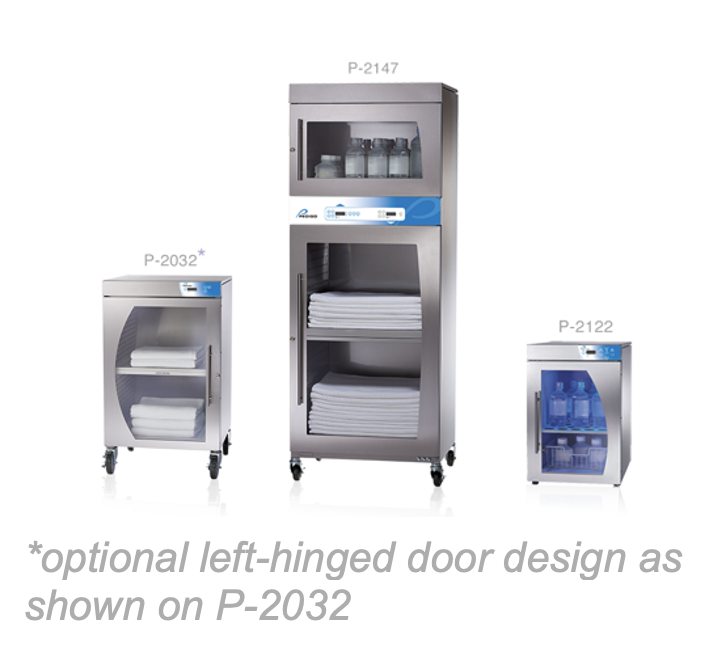 Pedigo offers a wide range of cabinet sizes so the right unit matches the right case load, avoiding overloading entirely. For fluid and blanket warming, we offer dedicated single-function cabinets as well as tri-mode units designed specifically for mixed use, so there’s never a question about whether the contents are appropriate for the cabinet. Every cabinet includes a standard access port that integrates with your facility’s existing temperature-monitoring system, helping reduce manual documentation and save staff time.
Equipment reliability is a compliance risk too. When equipment fails, facilities are left scrambling. Warming protocols get bypassed, documentation lapses, and patient care continuity is disrupted. The result is unplanned downtime and service calls at exactly the moments you can least afford them. Pedigo’s warming cabinets are designed to minimize these failure points because staying compliant requires equipment that stays operational.
That reliability is backed by an industry-leading 3-year warranty, compared to the 3-month coverage common among competitors. It’s a meaningful difference when you’re building a warming program your facility can depend on year after year, survey after survey.
IV fluid warming carries additional considerations: fluid manufacturers, such as Baxter, Hospira, B. Braun, set their own time-out-of-warmer and expiration limits. Many facilities require documented temperature monitoring and rotation logs for IV fluids. These documentation requirements can become a pain point, unless the equipment handles them automatically.
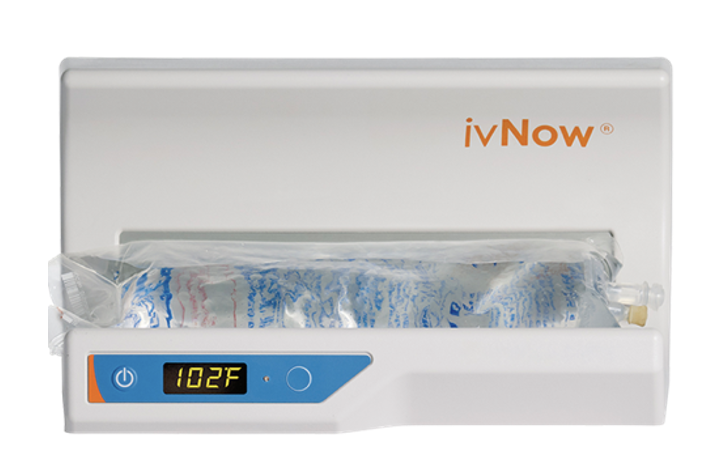 Pedigo’s fluid warming solutions:
AORN and anesthesia standards frame perioperative warming around a clear goal: prevent inadvertent hypothermia. That means pre-warming patients before anesthesia induction, using active warming systems for higher-risk procedures, monitoring core temperature throughout, and warming both IV and irrigation fluids when clinically appropriate.
Pre-warming without disposables is one area where the ivNow offers a practical advantage — allowing teams to warm IV fluids before induction as part of a pre-warming protocol, without the cost and waste of additional single-use supplies.
TJC compliance in warming isn’t about hitting one magic temperature number. It’s about having documented, evidence-based processes, and equipment that makes those processes easy to follow consistently. The right cabinet, the right size, and the right monitoring capabilities turn a complex compliance area into a routine one.
Whether you’re preparing for a survey, refining warming protocols, or evaluating replacement equipment, Pedigo can help make compliance easier with solutions designed around clinical best practices. Contact us today to set up a time for your local Pedigo rep to conduct an on-site warming assessment. Let us help you build the right warming setup and ensure your team has the tools needed to support safe, consistent perioperative care.
Product spotlight: ivNow Fluid Warming Systems l Pedigo Warming Solutions l Enthermics by Pedigo ivNext l


Copyright © 2026 Pedigo Products all rights reserved | Tel: 800.822.3501 | 4000 S.E. Columbia Way · Vancouver WA 98661 | Update cookies preferences